Ask ten flooring companies whether you should install solid hardwood or engineered hardwood, and you'll get ten confident answers. Half of them will be selling you what they happen to stock.
The truthful answer is that neither one wins outright. They win in different houses. A solid oak floor that's perfect for a 1940s bungalow in North Chattanooga can be the wrong call for a walkout basement three miles away — and the reason has almost nothing to do with quality.
Here's how to figure out which belongs in your Chattanooga, TN home.
What Actually Separates the Two
Solid hardwood is exactly what it sounds like: each plank is a single piece of wood, typically 3/4" thick, all the way through. It's the traditional choice, and it's what's under the carpet in a lot of older Chattanooga homes.
Engineered hardwood is a layered product. A real hardwood veneer sits on top of a plywood or high-density core, with the layers cross-oriented. The surface you walk on and see is genuine wood — this is what separates it from laminate or luxury vinyl, which are photographic prints under a wear layer.
That distinction matters because engineered hardwood gets unfairly lumped in with fake flooring. It isn't. A quality engineered floor with a thick veneer is real wood, looks identical to solid once installed, and in the right conditions outperforms it.
The Deciding Factor in Chattanooga: Moisture
Solid hardwood moves with humidity. It expands across the grain when moisture rises and contracts when it falls, which is why solid floors need expansion gaps and acclimation time before installation.
Engineered hardwood's cross-layered core resists that movement. The layers pull against each other, so the plank stays dimensionally stable through humidity swings that would cup a solid floor.
In the Tennessee Valley, this is not a minor consideration. Summer humidity here runs high for months, and plenty of Chattanooga homes have conditions that push solid hardwood past its comfort zone:
- Below-grade spaces. Basements and walkout lower levels are never a good match for solid hardwood. Engineered is the standard recommendation.
- Concrete slabs. Solid hardwood can't be nailed to concrete. Engineered can be glued down directly over a properly prepped slab.
- Vented crawlspaces. Common in older neighborhoods, and a steady source of moisture reaching the underside of the flooring.
- Radiant floor heating. Engineered handles the thermal cycling; solid generally doesn't.
Above grade, over a plywood subfloor, in a climate-controlled house? Solid hardwood is entirely at home. The
National Wood Flooring Association publishes installation standards covering acceptable moisture conditions for each — worth knowing that the guidance exists, because a contractor who ignores it is the actual risk.
Refinishing: Solid's Real Advantage
This is where solid hardwood earns its reputation.
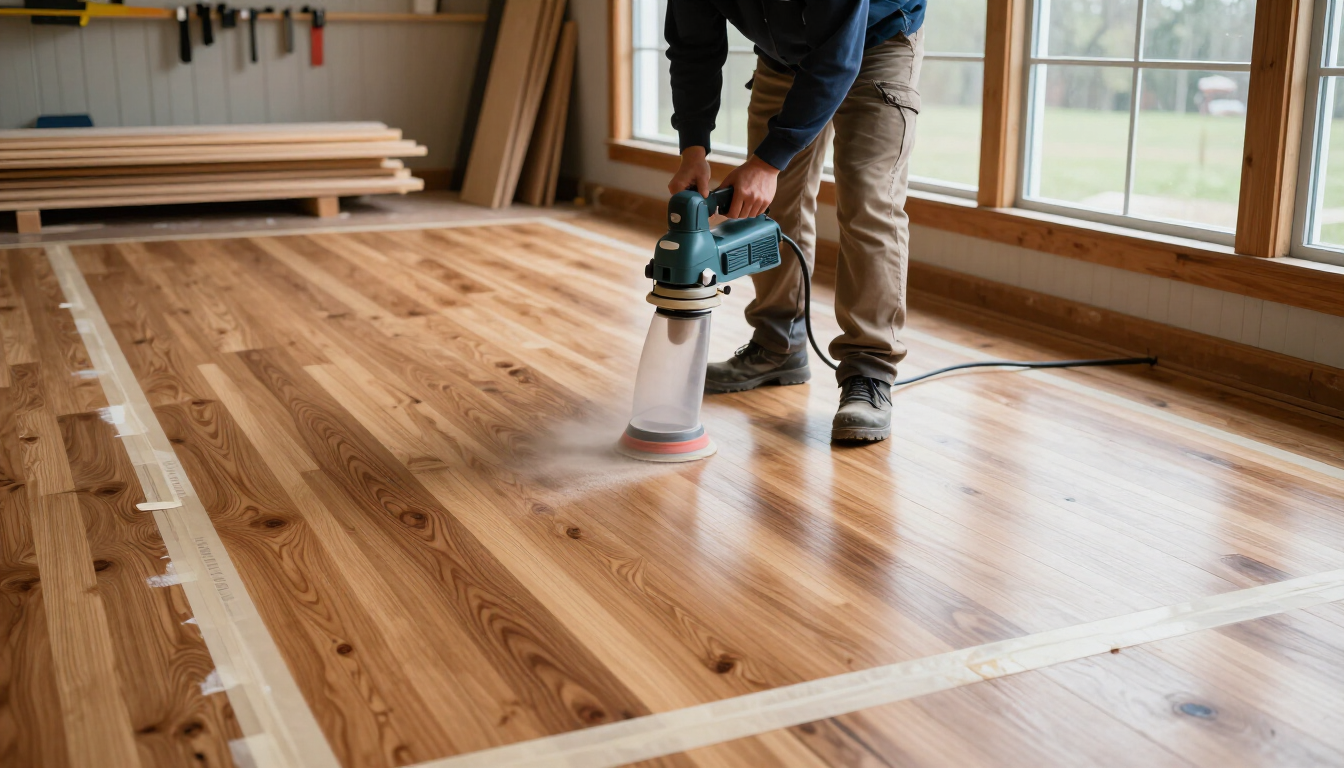
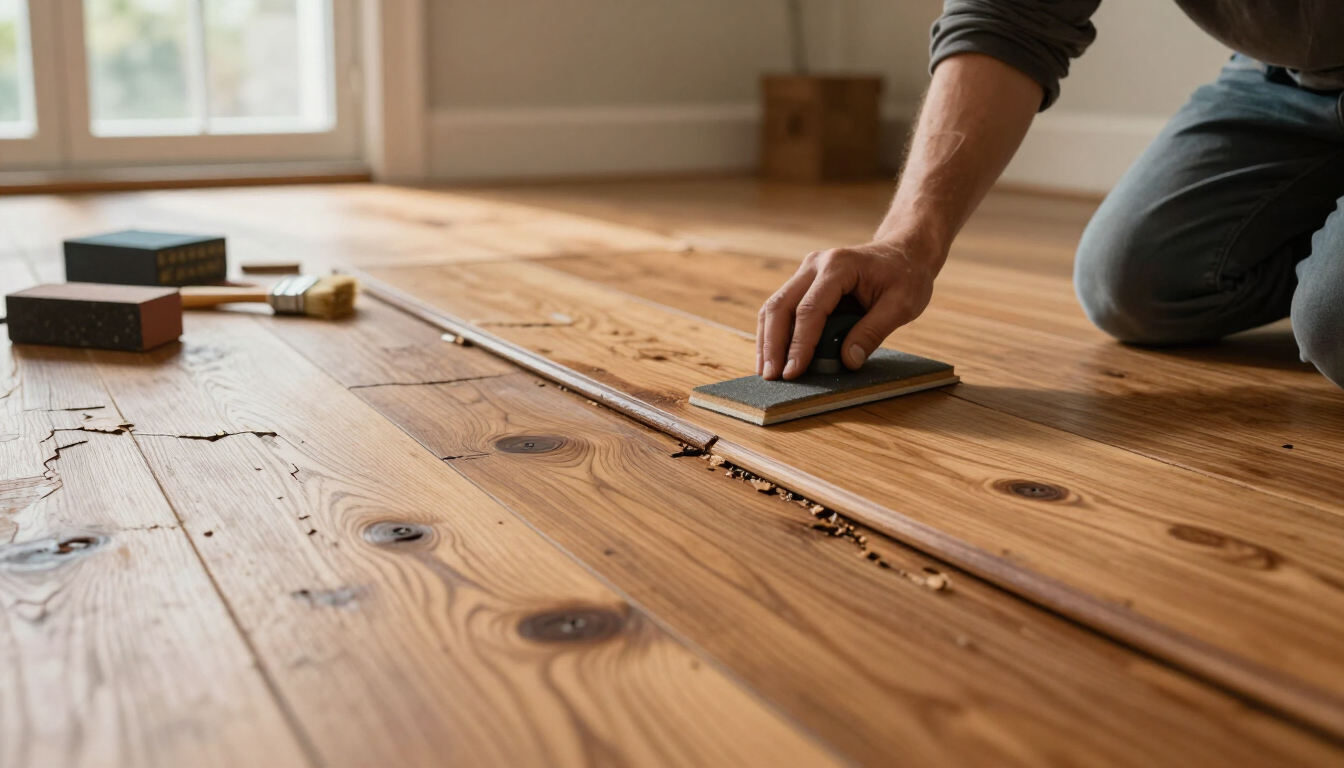
A 3/4" solid floor has substantial wood above the tongue and groove, which means it can be sanded and refinished multiple times across its life. That's why century-old floors in historic Chattanooga homes are still in service. Scratched, faded, or simply the wrong color? Sand it back and start over.
Engineered flooring depends entirely on veneer thickness, and this varies enormously between products:
- Thin veneers (roughly 1–2mm) can't be sanded at all. When the surface wears, the floor is done.
- Mid-range veneers (around 3mm) can usually handle one careful refinish.
- Thick veneers (4mm and up) can often be refinished two or three times, approaching solid hardwood's longevity.
Veneer thickness is the single most useful spec when comparing engineered products, and it's the one that separates a floor you'll replace in fifteen years from one your kids will refinish. Two engineered floors that look identical in a showroom can be very different investments.
Cost, Installation, and Resale
Material cost overlaps more than people expect. Budget engineered products run cheaper than solid hardwood, but premium engineered — wide planks, thick veneers, European white oak — often costs more than standard solid oak.
Installation is where engineered can pull ahead. It offers more methods (nail, glue, or float), installs over more subfloor types, and often requires less acclimation time. Some engineered products come prefinished and are walkable the same day, which matters if you're working around a move-in date.
Site-finished solid hardwood takes longer — sanding and finishing happen in your home — but produces a seamless surface with no beveled edges between boards, and lets you choose an exact custom color. For homeowners who want a specific look, that control is worth the extra days.
Resale value is where the myth needs correcting. Real estate listings and buyers generally treat both as "hardwood floors," because visually they are. What moves a buyer is condition, consistency throughout the home, and quality of installation. A beautifully installed engineered floor beats a poorly installed solid one every time.
Our
hardwood floor installation services cover both, and we'll tell you honestly which suits your subfloor and your plans — including when the cheaper option is the right one.
A Simple Way to Decide
Choose
solid hardwood if you're above grade over a wood subfloor, you want a floor that can be refinished repeatedly over decades, you're matching existing solid hardwood elsewhere in the home, or you want a custom site-finished color.
Choose
engineered hardwood if you're installing below grade or over concrete, you want wide planks that resist seasonal movement, you have radiant heat, or you want a faster installation with prefinished planks.
If you're doing a whole-home project spanning multiple levels, the answer is often both — engineered downstairs, solid upstairs, with a species and color chosen so the transition reads as continuous.
Frequently Asked Questions
Is engineered hardwood real wood?
Yes. The visible surface is genuine hardwood veneer over a stable core. It's fundamentally different from laminate or vinyl, which use a printed image rather than actual wood.
Which lasts longer, solid or engineered?
Solid hardwood generally has a longer potential lifespan because it can be refinished more times. A quality engineered floor with a thick veneer, properly maintained, still lasts for decades.
Can I install hardwood in my Chattanooga basement?
Solid hardwood isn't recommended below grade due to moisture. Engineered hardwood is the standard choice there, provided moisture testing and a proper vapor barrier are handled first.
Does engineered hardwood hurt resale value?
Not meaningfully. Buyers respond to how a floor looks and how well it was installed. Both are marketed and perceived as hardwood.
How thick should the veneer be on engineered flooring?
For a floor you intend to refinish someday, look for 3mm or thicker. Under 2mm means you're buying a floor that gets replaced rather than restored.
Can engineered and solid hardwood be used in the same house?
Yes, and it's common in homes with multiple levels or mixed subfloors. Matching species, plank width, and finish keeps it visually seamless.
Do I need to acclimate flooring before installation in Chattanooga?
Yes for solid hardwood, and for most engineered products as well. Skipping acclimation is a leading cause of gapping and cupping after installation.
Let's Find the Right Floor for Your Home
There's no universally superior product — only the right one for your subfloor, your moisture conditions, and how long you plan to live with the result. That's a conversation worth having before you fall in love with a sample.
With more than 20 years installing floors across Chattanooga and North Georgia, we've seen what holds up here and what doesn't.
Explore our work with
hardwood flooring in Chattanooga, then call
1st Class Flooring at (423) 645-1711 or
schedule your consultation. We'll walk your home, check your subfloor, and give you a straight recommendation.